

What is sports fashion trend: a 2026 guide for style lovers
Sports fashion has transformed from purely functional athletic wear into a cultural statement that defines how millions dress every day. The fusion of athleisure and streetwear now shapes wardrobes across generations, with Gen Z leading a movement that prioritises comfort, performance, and personal expression over traditional fashion rules. This guide explores how sports fashion evolved, what trends dominate 2026, and how you can embrace these styles authentically. You will discover the key influences driving modern sportswear, from vintage activewear resurgence to NFL jersey sales patterns that reveal deeper consumer behaviour shifts.
Table of Contents
- The Evolution Of Sports Fashion: From Performance To Lifestyle
- Understanding The Athleisure And Streetwear Fusion In 2026
- The Rise Of Vintage Activewear And Personalised Sports Fashion
- How Sports Fashion Reflects Culture: NFL Jerseys And Global Appeal
- Explore Top Sports Apparel And Vintage Pieces At Gear & Glory UK
Key takeaways
| Point | Details |
|---|---|
| Fusion defines 2026 | Athleisure and streetwear merge to create the dominant sports fashion aesthetic |
| Vintage gains traction | Performance-focused vintage activewear offers authenticity and bold design contrasts |
| Jerseys reflect culture | NFL jersey sales reveal consumer identity beyond team performance alone |
| Collaboration intensifies | Brand partnerships between athletic and fashion labels drive hybrid innovation |
| Expression over conformity | Mismatched sets and personalised styles replace expensive matching uniforms |
The evolution of sports fashion: from performance to lifestyle
Sports fashion did not emerge overnight. Its journey from purely functional athletic wear to a lifestyle statement spans decades of innovation, cultural shifts, and changing social priorities. Understanding this evolution helps you appreciate why certain trends dominate today and how to navigate the increasingly blurred lines between performance gear and everyday style.
The transformation began with technical innovations that made sportswear more comfortable and versatile. DuPont’s Spandex revolutionised performance fabrics in the 1950s, introducing stretch and flexibility that allowed garments to move with the body. This breakthrough laid the foundation for modern athletic wear by prioritising comfort alongside function. By the 1960s, brands recognised that performance features could translate into everyday appeal.
The streetwear crossover accelerated when Adidas introduced tracksuits in 1963, creating a template for athletic wear that worked beyond the gym. These pieces migrated from sports fields to city streets throughout the 1970s, particularly in North America where hip-hop culture embraced athletic brands as symbols of style and identity. The three-stripe tracksuit became as much a cultural marker as a performance garment, signalling the beginning of sports fashion as we recognise it today.
Several key milestones shaped this transformation:
- Technical fabric development enabled garments that performed during exercise yet looked appropriate for casual settings
- Celebrity endorsements elevated athletic brands from functional to aspirational status
- Wellness culture normalised wearing workout clothes throughout the day
- Social media created visibility for athletic wear in non-sporting contexts
- Gender role evolution reduced formal dress expectations in many environments
Athleisure emerged as a distinct category when designers recognised consumers wanted versatile pieces that transitioned seamlessly between activities. The craftsmanship behind NFL jerseys demonstrates how technical construction methods from professional sports influenced broader fashion production. Moisture-wicking fabrics, ergonomic cuts, and durability standards migrated from elite athletic contexts into everyday wardrobes. This technical heritage gives modern sports fashion credibility that purely aesthetic trends lack.
The lifestyle shift gained momentum as wellness priorities reshaped daily routines. People no longer compartmentalised exercise into isolated gym sessions but integrated movement throughout their days. Sports fashion responded by creating pieces sophisticated enough for work meetings yet functional enough for impromptu workouts. This versatility explains why athleisure dominates contemporary wardrobes, particularly among younger consumers who reject rigid dress codes in favour of comfort and practicality.
Understanding the athleisure and streetwear fusion in 2026
The defining characteristic of sports fashion in 2026 is the seamless integration of athleisure’s performance focus with streetwear’s cultural cachet. This fusion creates a hybrid aesthetic that dominates everything from high street retailers to luxury fashion houses. Athleisure and streetwear are considered the uniform of Gen Z precisely because this combination delivers both functionality and style credibility.

Athleisure brings technical performance to the partnership. These garments feature moisture-management systems, four-way stretch fabrics, and ergonomic construction that supports movement. The focus remains on comfort and versatility, creating pieces that work for yoga classes, coffee meetings, and everything between. Athleisure prioritises how clothing feels and performs rather than purely how it looks, though aesthetics matter increasingly as the category matures.
Streetwear contributes cultural weight and fashion-forward design elements. Where athleisure might create a simple black legging, streetwear adds oversized silhouettes, bold graphics, and brand collaborations that signal cultural awareness. August Duncan highlights athleisure roots in athletic wear but notes streetwear offers distinct style elements that elevate basic performance pieces into statement looks. This cultural dimension transforms functional clothing into fashion that communicates identity and values.
The fusion manifests in several key ways:
- Oversized hoodies paired with technical leggings create contrast between streetwear volume and athleisure precision
- Retro athletic branding meets contemporary cuts and fabrics
- Neutral athleisure bases anchor bold streetwear accessories and outerwear
- Performance footwear transitions from purely functional to fashion-statement status
- Layering techniques borrowed from streetwear add visual interest to minimal athletic pieces
Gen Z embraces this hybrid because it aligns with their values around authenticity, comfort, and self-expression. They reject the notion that fashion requires sacrifice or discomfort, instead demanding pieces that perform across multiple contexts. The 2026 activewear trends reflect this expectation, with brands launching collections that blur traditional category boundaries. A vintage Adidas hoodie exemplifies this fusion, combining heritage athletic branding with the relaxed fit and cultural resonance that streetwear demands.
Pro Tip: Build your sports fashion wardrobe around versatile basics in neutral colours, then add personality through statement pieces like vintage jerseys or bold accessories. This approach maximises outfit combinations whilst maintaining the fusion aesthetic.
Brand collaborations intensify the fusion by bringing together expertise from both worlds. Athletic brands partner with streetwear labels and fashion designers to create limited editions that generate cultural buzz whilst pushing technical boundaries. These partnerships validate sports fashion as serious style rather than merely convenient clothing, elevating the category’s status across fashion hierarchies.
The rise of vintage activewear and personalised sports fashion
Whilst mainstream fusion dominates, a counter-trend towards vintage activewear and personalised styling challenges the uniformity of matching sets and branded collections. This movement prioritises individual expression over conformity, authenticity over newness, and comfort over aesthetic cohesion. Understanding this shift reveals deeper changes in how consumers approach sports fashion and what they value in their wardrobes.
Vintage activewear prioritises performance with bold designs yet overlaps athleisure style as lines blur between categories. These pieces were originally created for actual athletic activity, featuring robust construction and functional details that modern lifestyle-focused athleisure sometimes lacks. The bold colour blocking, oversized logos, and distinctive silhouettes of 1980s and 1990s sportswear offer visual interest that contemporary minimalism often misses. Vintage pieces carry authenticity through their original purpose and aged character that new garments cannot replicate.
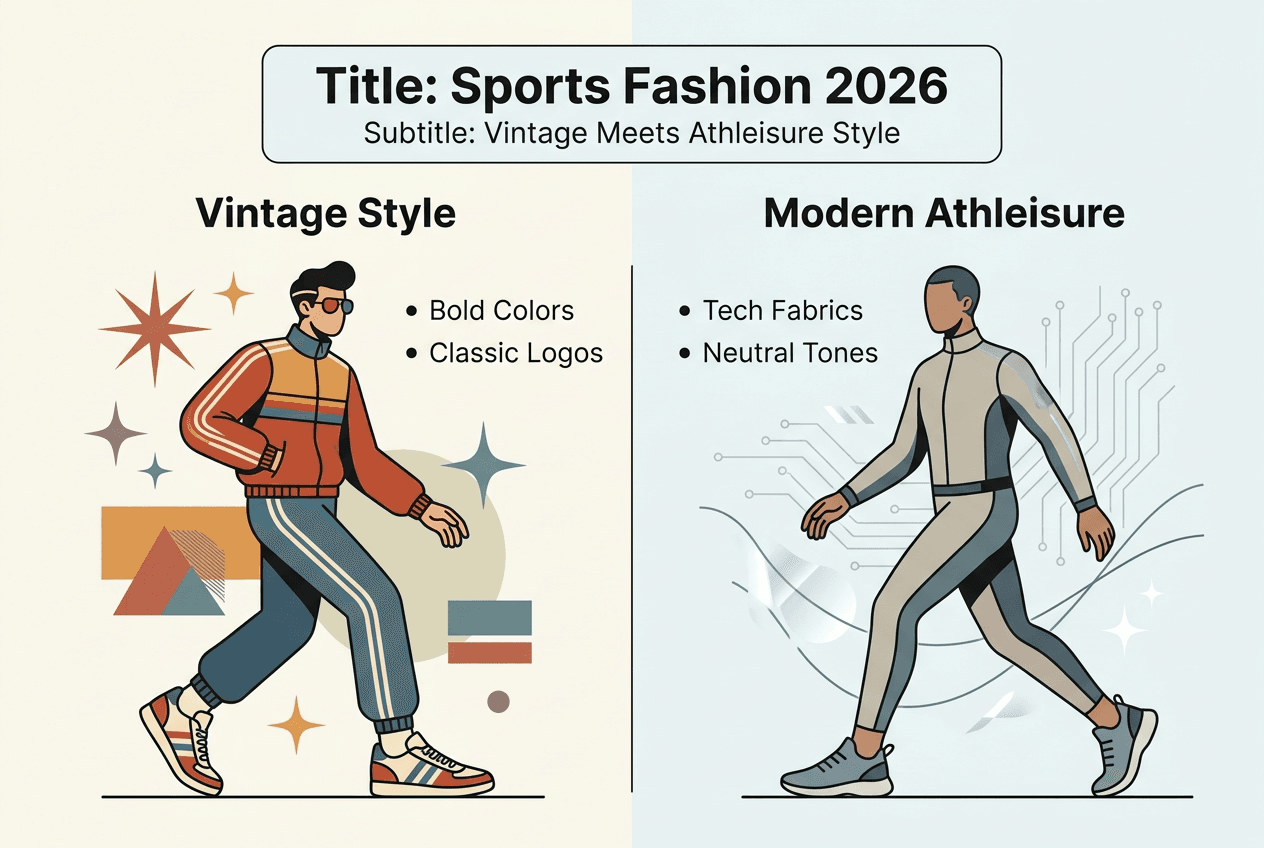
The distinction between vintage activewear and modern athleisure matters for understanding current trends:
| Aspect | Vintage activewear | Modern athleisure |
|---|---|---|
| Primary purpose | Actual athletic performance | Lifestyle versatility |
| Design approach | Bold graphics and colour | Minimal aesthetic |
| Construction focus | Durability for movement | Comfort for all-day wear |
| Cultural value | Nostalgia and authenticity | Contemporary relevance |
| Price point | Variable, often lower | Premium positioning |
The high cost and conformity of matching sets drive mismatched, breathable, comfortable pieces’ popularity among consumers who reject what some call the “tax on conformity.” Matching athleisure sets often cost £40 to £70 per piece, creating significant barriers for younger consumers whilst imposing aesthetic uniformity that conflicts with personal expression values. Mismatched approaches allow individuals to combine pieces based on actual comfort preferences, body needs, and style instincts rather than brand-dictated coordination.
Several factors fuel the mismatched and vintage movement:
- Economic accessibility makes vintage and mix-match approaches more budget-friendly
- Environmental consciousness favours extending garment lifecycles over constant newness
- Individuality becomes more valued than brand conformity in social contexts
- Comfort optimisation allows choosing the best piece for each body area
- Nostalgic appeal connects wearers to cultural moments and memories
Pro Tip: When building a mismatched sports fashion wardrobe, focus on complementary colour families rather than exact matches. Choose pieces that share undertones even if they differ in shade, creating visual harmony without uniformity.
This trend intersects with broader sustainability conversations in fashion. Vintage pieces inherently reduce environmental impact by extending existing garments’ useful lives rather than demanding new production. The authentic vintage sportswear guide explains how to identify genuine vintage pieces and understand their value beyond mere aesthetics. Quality vintage activewear often outlasts contemporary fast fashion equivalents, offering better long-term value whilst reducing consumption cycles.
The personalised approach also reflects changing attitudes towards fashion authority. Consumers increasingly trust their own style instincts over brand messaging or influencer recommendations. They combine high and low, new and vintage, athletic and casual based on personal criteria rather than external validation. This democratisation of fashion judgment empowers individuals whilst challenging brands to offer genuine value rather than relying on aspirational marketing alone.
How sports fashion reflects culture: NFL jerseys and global appeal
NFL jersey sales provide transparent data on how sports fashion functions as cultural expression rather than purely functional clothing. These garments bridge athletic performance, team loyalty, player fandom, and fashion statement in ways that reveal broader consumer behaviour patterns. Analysing jersey sales trends illuminates what drives sports fashion choices beyond basic utility or aesthetic preference.
NFL jersey sales reflect team performance, player popularity, media exposure, and global strategies in complex interactions that shift throughout seasons and across markets. The data shows nuanced consumer decision-making that considers multiple factors simultaneously. Kansas City Chiefs top jersey sales at 12.7% in 2026, reflecting sustained success and star player appeal, yet unexpected teams like Buffalo Bills and San Francisco 49ers show strong performance driven by compelling narratives and strategic retro line releases.
Player-specific jersey sales now represent 41% of total NFL apparel revenue, a significant increase from 35% in 2022. This shift indicates consumers increasingly express individual player fandom rather than purely team loyalty. Personality, playing style, and off-field presence influence purchasing decisions as much as on-field statistics. Social media amplifies player brands, creating direct connections between athletes and fans that bypass traditional team-focused marketing.
Key sales patterns reveal cultural dynamics:
| Market segment | Share | Key drivers |
|---|---|---|
| Domestic USA | 68% | Team loyalty and local identity |
| International | 32% | Player brands and cultural appeal |
| Retro/vintage styles | 23% | Nostalgia and fashion statement |
| Current season | 77% | Performance and relevance |
International markets drive significant growth, with Germany, Japan, and Mexico showing particularly strong engagement. These consumers often lack geographic team loyalty, instead choosing jerseys based on player appeal, aesthetic preferences, or cultural connections to American sports. This globalisation transforms jerseys from local team identifiers into international fashion statements that communicate cultural awareness and style sensibility.
The storytelling dimension matters enormously. Teams and players with compelling narratives, whether comeback stories, underdog status, or cultural significance, generate disproportionate jersey sales relative to pure performance metrics. The retro NFL jerseys 2026 collection demonstrates how historical narratives drive contemporary purchases, with fans embracing legendary players and iconic designs that carry cultural weight beyond current season relevance.
Real-time sales tracking reveals immediate consumer responses to events:
- Playoff performances generate sales spikes within hours of game completion
- Draft picks create instant demand before players take a single professional snap
- Trade announcements shift sales patterns across multiple teams simultaneously
- Social media moments drive jersey interest independent of game performance
- Retirement announcements trigger nostalgia-driven purchasing surges
This data-driven understanding helps brands and retailers anticipate trends rather than merely react to them. The transparency of jersey sales as a metric provides clearer insight into consumer preferences than many other fashion categories where purchasing data remains fragmented or proprietary. For sports fashion enthusiasts, understanding these patterns helps identify authentic trends versus temporary hype, enabling more informed wardrobe investments.
Explore top sports apparel and vintage pieces at Gear & Glory UK
Now that you understand the forces shaping sports fashion in 2026, you can apply this knowledge to build a wardrobe that reflects your personal style whilst embracing key trends. Gear & Glory specialises in authentic American sports apparel and vintage pieces that embody the fusion aesthetics and individual expression we have explored throughout this guide.

The curated collection bridges contemporary athleisure with vintage authenticity, offering pieces that work individually or as part of broader styling approaches. Whether you are drawn to the bold graphics of vintage Adidas hoodies or the team pride of a New England Patriots tee, each piece represents the quality and authenticity that distinguish genuine sports fashion from generic athletic wear. The selection includes NFL, NBA, MLB, and NHL apparel alongside rare vintage finds and modern Nike and Adidas gear.
Based in Market Deeping, Gear & Glory brings US sports culture to the UK with a focus on pieces that celebrate sporting legends whilst meeting contemporary style standards. The emphasis on authenticity ensures you are investing in garments with genuine heritage rather than mass-produced imitations. Explore the full range at Gear & Glory UK to discover how these pieces can anchor your sports fashion wardrobe.
Frequently asked questions
What is the difference between athleisure and streetwear?
Athleisure focuses on comfort and performance fabrics designed for versatile wear across athletic and casual contexts. Streetwear adds cultural style elements, bold graphics, and fashion-forward silhouettes that elevate basic athletic pieces into statement looks with deeper cultural resonance.
Why are mismatched workout sets gaining popularity in 2026?
Many consumers seek comfort and personal expression over expensive matching sets that impose conformity. Mismatched approaches offer flexibility to optimise each piece for specific body needs whilst reducing costs and enabling individual style choices that reflect personal preferences rather than brand dictates.
How do NFL jersey sales reflect sports fashion trends?
Sales data captures player and team popularity beyond pure game outcomes, revealing how storytelling, cultural narratives, and personal branding influence consumer choices. International markets and real-time purchasing patterns demonstrate that jerseys function as fashion statements and cultural identifiers rather than merely team loyalty markers. The retro NFL jerseys 2026 collection shows how historical significance drives contemporary fashion choices.
What makes vintage activewear different from modern athleisure?
Vintage activewear was designed for actual athletic performance with durable construction and bold aesthetic choices. Modern athleisure prioritises lifestyle versatility and minimal design over pure performance, though the categories increasingly overlap as contemporary brands incorporate vintage-inspired elements and retro styling into new collections.
How can I incorporate sports fashion trends without looking like I am heading to the gym?
Balance technical pieces with structured items, choose elevated fabrics and cuts, and add accessories that signal intentional styling rather than workout convenience. Layer oversized outerwear over fitted athletic bases, select neutral colours as foundations, and incorporate vintage or statement pieces that add personality beyond pure function.
Recommended
- What is NFL apparel? a guide to authentic vintage sportswear – Gear&Glory UK
- Best retro NFL jerseys to celebrate classic legends 2026 – Gear&Glory UK
- How to build a vintage jersey collection in the UK – Gear&Glory UK
- How NFL jerseys are made: the craft behind the gear – Gear&Glory UK
- What is wearable tech fashion? A 2026 guide – Smartlet
- Role of Hats in Sports Fashion: Premium Style Guide 2026