

How NFL jerseys are made: the craft behind the gear
Most fans assume NFL jerseys are made in America, yet over 90% are produced in Asia. This surprises many UK enthusiasts who treasure their team colours. Understanding the manufacturing journey reveals the craftsmanship, advanced materials, and global coordination required to deliver jerseys that combine performance technology with cultural significance. This guide takes you inside the factories and processes behind every authentic NFL jersey.
Table of Contents
- Introduction To NFL Jerseys
- Global Manufacturing Landscape
- Material Science And Fabric Technology
- Manufacturing And Assembly Process
- Customisation And Personalisation
- Quality Assurance And Compliance
- Historical Evolution And Technological Advances
- Future Innovations In Jersey Making
- Explore Authentic NFL Gear At Gear & Glory
- FAQ
Key takeaways
| Point | Details |
|---|---|
| Global production | Over 50% of NFL jerseys are made in Chinese facilities, with less than 10% produced domestically. |
| Advanced fabrics | Polyester-spandex blends deliver up to 30% stretch and reduce moisture by 40% for player comfort. |
| Precision assembly | Computerised cutting and triple-stitch reinforcements boost durability by 25% in high-stress areas. |
| Durable customisation | Sublimation printing bonds numbers permanently, whilst embroidered patches add premium texture and detail. |
| Strict standards | NFL jerseys meet OEKO-TEX and CPSIA safety requirements through rigorous fabric testing and licensing. |
Introduction to NFL jerseys
NFL jerseys represent far more than sportswear. They symbolise team identity, historic moments, and a connection between fans and their sporting heroes. For players, jerseys combine cutting-edge performance technology designed to withstand physical collisions, extreme weather, and constant movement. UK fans increasingly seek authentic gear that reflects this dual purpose.
The global demand for NFL merchandise has grown substantially, with fans across continents wanting genuine apparel. Understanding the production process enhances appreciation beyond simply owning team colours. It reveals the innovation, testing, and craftsmanship embedded in each garment.
Key elements that define NFL jerseys include:
- Performance fabrics engineered for moisture management and durability
- Officially licensed logos and branding that authenticate team affiliation
- Construction techniques balancing player comfort with spectator appeal
- Cultural significance as collectables and fashion statements
This knowledge transforms how supporters view their Dan Marino NFL jersey from simple merchandise into a product of sophisticated engineering.
Global manufacturing landscape
China dominates NFL jersey production, housing specialised facilities in Putian, Guangzhou, and Xiamen. These cities host factories with decades of expertise in technical sportswear manufacturing. China’s apparel market reached $363 billion in 2024, demonstrating the scale of textile infrastructure supporting this industry.
A small percentage of premium and limited-edition jerseys are manufactured in the United States, primarily for special releases or custom orders. This domestic production accounts for less than 10% of total output. Manufacturing location directly influences production speed, cost structures, and quality oversight capabilities.
| Manufacturing region | Production percentage | Primary advantages |
|---|---|---|
| China (Putian, Guangzhou, Xiamen) | 50-60% | Cost efficiency, specialised expertise, established infrastructure |
| Other Asian countries | 30-40% | Labour availability, proximity to materials, quality control |
| United States | Less than 10% | Premium customisation, limited editions, faster domestic delivery |
Many UK fans assume jerseys originate from American factories, yet over 90% are made in Asian facilities. This global production network enables the NFL to meet worldwide demand whilst maintaining competitive pricing. Asian manufacturers have invested heavily in technology and training to deliver products meeting strict NFL specifications.
The concentration of production in specific regions creates supply chain efficiencies. Raw materials, printing equipment, and skilled labour exist in close proximity, reducing lead times and transportation costs.
Material science and fabric technology
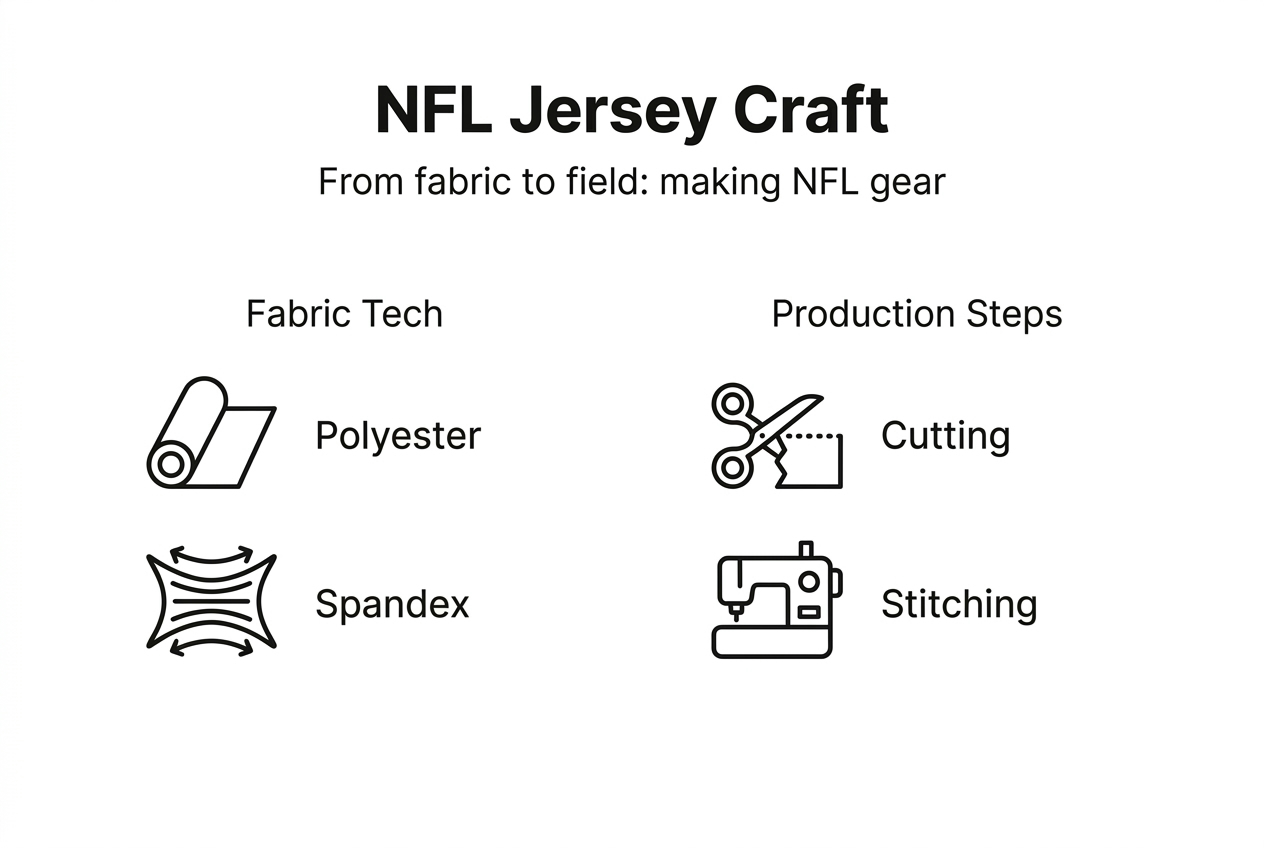
Modern NFL jerseys utilise polyester-spandex blends engineered specifically for athletic performance. These fabrics provide up to 30% stretch and reduce skin moisture by 40% through advanced moisture-wicking properties. The combination delivers flexibility during sudden movements whilst maintaining structural integrity during tackles.
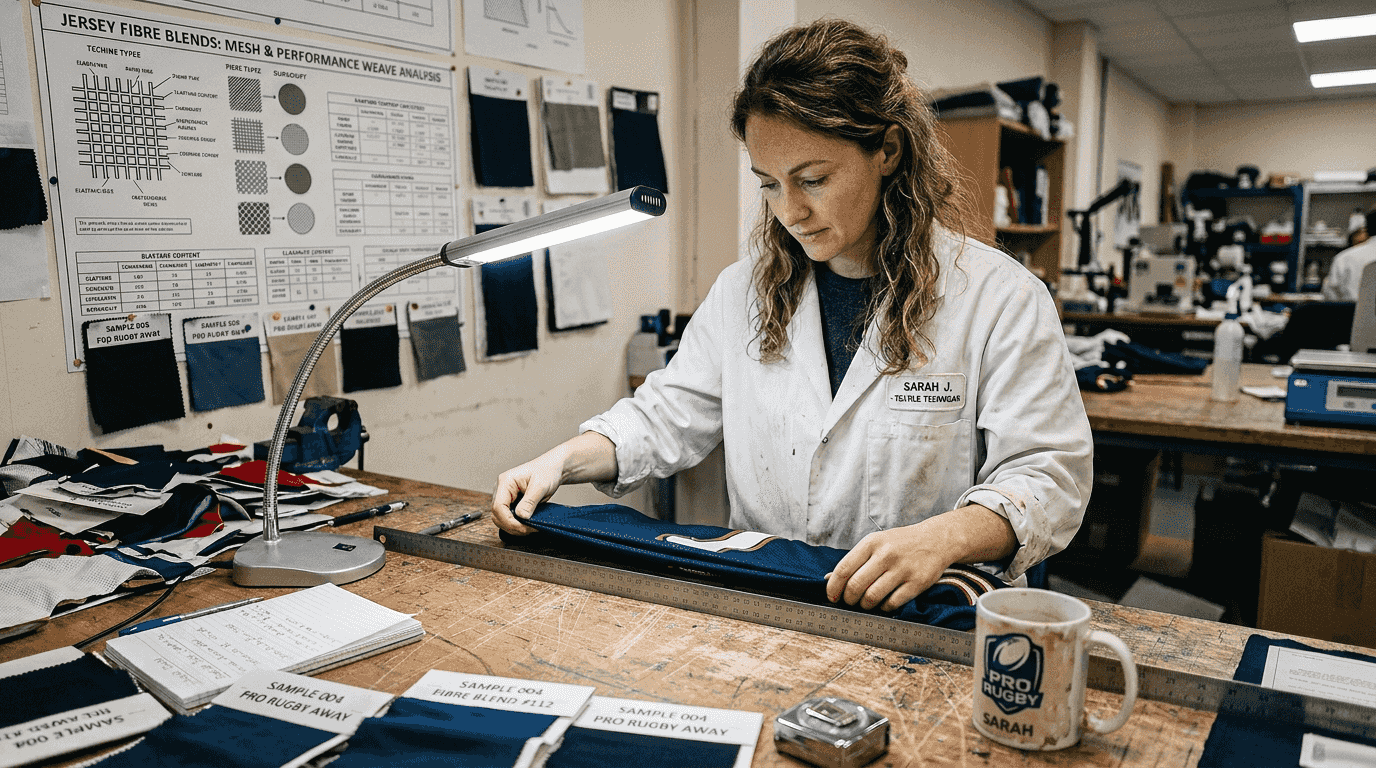
Polyester dominates because it dries quickly, resists tears, and maintains shape after repeated washing. Spandex adds elasticity, allowing jerseys to move with players without restricting motion. This balance proves crucial during games where fabric must withstand extreme physical stress.
Moisture-wicking technology pulls sweat away from skin to the fabric surface, where it evaporates rapidly. This keeps players cooler and reduces the weight of saturated jerseys during play. Enhanced airflow treatments in premium fabrics further improve temperature regulation.
Key fabric characteristics include:
- Tear resistance rated for high-impact contact sports
- Quick-dry capabilities reducing fabric saturation by 40%
- Lightweight construction minimising player fatigue
- Colourfast treatments preventing fading after repeated exposure
Pro Tip: Check fabric composition labels on your Dan Marino NFL jersey to verify authentic polyester-spandex blends, which indicate genuine performance materials rather than cheaper cotton substitutes.
Specialised fabric treatments also combat bacterial growth and odour retention, essential for garments worn during intense physical activity. These invisible technologies add substantial value to authentic jerseys compared to basic replicas.
Manufacturing and assembly process
NFL jersey production begins with computerised fabric cutting that ensures consistent panel shapes across thousands of units. Computer-aided design eliminates human error, creating precise pieces that fit together seamlessly during assembly. This precision matters because even minor inconsistencies affect how jerseys hang and move.
Reinforced stitching represents the next critical phase. Triple-stitch reinforcements on shoulders, neck openings, and side seams increase durability by approximately 25% compared to standard stitching. These high-stress areas require extra strength to withstand pulling, stretching, and repeated washing.
Flatlock seams minimise irritation by creating smooth, flat joins rather than raised ridges. Players wearing jerseys for hours benefit from this attention to comfort. The manufacturing process follows these steps:
- Fabric rolls are loaded into computerised cutting machines programmed with exact panel specifications
- Cut panels undergo quality inspection before advancing to assembly stations
- Specialised sewing machines apply triple-stitch reinforcements to designated high-stress zones
- Flatlock seam machines join body panels with minimal thickness and maximum strength
- Collar and sleeve attachments receive additional reinforcement stitching
- Final assembly includes hem finishing and size label attachment
| Stitching type | Durability increase | Primary application | Comfort benefit |
|---|---|---|---|
| Triple-stitch | 25% stronger | Shoulders, neck, side seams | Prevents tearing during play |
| Flatlock seam | Standard strength | Panel joins, sleeves | Reduces chafing and irritation |
| Standard stitch | Baseline | Hems, labels | Adequate for low-stress areas |
Pro Tip: Inspect the shoulder seams on any NFL jersey you purchase. Authentic jerseys show visible triple-stitch reinforcement, whilst replicas often use single or double stitching that compromises longevity.
Assembly combines automated precision with skilled craftsmanship. Whilst machines handle cutting and basic stitching, experienced technicians manage quality control and complex attachment points requiring human judgement.
Customisation and personalisation
Player names and numbers receive special treatment through sublimation printing, which bonds ink directly to fabric fibres. This process prevents peeling and fading that plague cheaper heat-transfer methods. Sublimation creates permanent graphics that withstand hundreds of washes without degradation.
Embroidered patches deliver premium texture and visual depth for team logos and NFL shields. The raised stitching adds authenticity and perceived value that flat printing cannot match. Official jerseys combine both techniques strategically, using sublimation for large graphics and embroidery for smaller, detailed elements.
Customisation significantly impacts jersey cost and collectability. Limited-edition player jerseys with special patches or commemorative details command higher prices because production requires additional steps and materials. Collectors prize these variations for their rarity and connection to specific moments.
Different customisation approaches for various jersey tiers:
- Elite jerseys: sublimation printing with premium embroidered patches and tackle twill numbers
- Limited jerseys: sublimation graphics with standard embroidered team logos
- Game jerseys: screen-printed numbers with basic embroidered patches
- Replica jerseys: heat-transfer graphics with minimal embroidery
Authentic jerseys like this vintage NFL jersey showcase sublimation quality that remains vibrant decades after production. Modern examples such as this customised NFL jersey demonstrate current printing precision.
The sublimation process involves printing designs onto special paper, then using heat and pressure to transfer ink into fabric at the molecular level. This differs fundamentally from surface applications that sit atop fibres and eventually separate.
Quality assurance and compliance
Every NFL jersey undergoes rigorous testing before receiving licensing approval. Fabric must pass standardised durability tests measuring stretch resistance, tear strength, and moisture absorption rates. These specifications ensure jerseys perform consistently regardless of manufacturing location.
Compliance extends beyond performance to safety standards. OEKO-TEX certification confirms fabrics contain no harmful chemicals, whilst CPSIA requirements govern materials used in products sold to consumers. NFL licensing agreements mandate these certifications, protecting both players and fans.
Quality control checkpoints include:
- Raw fabric inspection for weave consistency and colour accuracy
- Stitching strength tests on sample garments from each production batch
- Colourfast verification through simulated washing cycles
- Dimensional stability checks ensuring jerseys maintain size after laundering
- Final visual inspection of completed jerseys before packaging
Licensing ensures only authorised logos, team colours, and NFL branding appear on official merchandise. Counterfeit jerseys skip these controls, using inferior materials and methods that fail quickly.
“Quality control in licensed NFL apparel isn’t optional. It protects the league’s reputation, ensures player safety, and guarantees fans receive products worthy of their investment. Every authentic jersey represents a commitment to excellence that counterfeit producers simply cannot match.”
These standards explain price differences between authentic and replica jerseys. Authentic versions absorb the cost of compliance testing, premium materials, and licensed manufacturing that replicas circumvent.
Historical evolution and technological advances
Early NFL jerseys used wool and cotton, materials chosen for availability rather than performance. These heavy, moisture-absorbing fabrics became uncomfortable during games. Players endured saturated jerseys that added weight and restricted movement. Cotton required frequent replacement due to tears and deterioration.
The shift to synthetic polyester blends during the 1980s revolutionised jersey construction. Polyester offered superior durability, faster drying, and lighter weight. This transition paralleled broader changes in athletic apparel across all professional sports.
Technological innovations progressively reduced sweat retention and fabric weight:
- 1960s-1970s: heavy cotton and wool jerseys weighing over 400 grams
- 1980s-1990s: introduction of polyester blends reducing weight by 30%
- 2000s-2010s: moisture-wicking treatments and mesh panels enhancing breathability
- 2020s-present: advanced polyester-spandex blends with antimicrobial properties
This evolution reflects increasing athletic demands as players became faster, stronger, and played longer seasons. Modern jerseys must support performance levels unimaginable during the sport’s early decades. Fan expectations also shifted, with supporters wanting apparel that looks authentic whilst offering everyday wearability.
The transformation continues as manufacturers explore sustainable materials and production methods that reduce environmental impact without compromising performance standards.
Future innovations in jersey making
Emerging technologies promise to revolutionise NFL jersey production in coming years. 3D printing could reduce lead times from weeks to days, enabling rapid prototyping and ultra-customised designs. This technology allows intricate patterns and structural elements impossible with traditional manufacturing.
Automation advances will enhance precision whilst potentially lowering costs. Robotic systems already handle fabric cutting and basic assembly in some facilities. Future iterations may manage complex stitching and quality inspection, reducing human error and accelerating production.
Potential innovations transforming jersey manufacturing include:
- 3D-printed fabric structures with integrated ventilation channels and impact absorption
- AI-driven customisation allowing fans to design unique jerseys with instant production
- Biodegradable performance fabrics reducing environmental impact without sacrificing durability
- Smart textiles incorporating sensors to monitor player biometrics during games
These advances could create hyper-customised jerseys tailored to individual body measurements and preferences. Fans might order jerseys that fit precisely, whilst players benefit from garments optimised for their specific positions and playing styles.
Sustainability concerns drive research into recycled polyester and closed-loop manufacturing systems. Future NFL jerseys may achieve current performance standards whilst significantly reducing carbon footprints and material waste.
The convergence of these technologies suggests a future where manufacturing becomes faster, more personalised, and environmentally responsible. UK fans will benefit from quicker delivery, greater customisation options, and jerseys that represent both sporting excellence and ecological awareness.
Explore authentic NFL gear at Gear & Glory
Now that you understand the craftsmanship behind NFL jerseys, discover genuine pieces that embody this quality. Gear & Glory specialises in authentic, officially licensed NFL apparel sourced for UK fans who value genuine gear.

Our collection includes vintage NFL jerseys showcasing classic designs and modern NFL jerseys featuring current players. Every item reflects the manufacturing standards and material quality detailed in this guide. Based in Market Deeping, we bring American sports culture directly to the UK with delivery options designed for convenience. Browse our selection to find jerseys that celebrate the legends and technology of professional football.
FAQ
What materials are used in NFL jerseys?
NFL jerseys primarily use polyester-spandex blends engineered for stretch, durability, and moisture-wicking performance. These synthetic fibres balance lightweight comfort with tear resistance, keeping players cool during intense physical activity. Advanced treatments enhance breathability and reduce bacterial growth.
Are all NFL jerseys made in the United States?
No, over 90% of NFL jerseys are manufactured in Asian countries, particularly China. Major production hubs exist in Putian, Guangzhou, and Xiamen. Only limited editions and special custom jerseys are made domestically, representing less than 10% of total output.
How is player customisation applied to jerseys?
Numbers and names use sublimation printing, which bonds ink directly to fabric fibres for permanent, fade-resistant graphics. Embroidered patches add premium texture for team logos and NFL branding. This combination ensures customisation withstands repeated washing without peeling or degradation.
Why do official NFL jerseys cost more than replicas?
Authentic jerseys use high-performance polyester-spandex fabrics, licensed manufacturing processes, and durable sublimation printing techniques. Strict quality control, compliance testing, and official NFL licensing add costs that replica producers avoid. These investments ensure longevity and authentic performance characteristics.
Recommended
- Jordan Love #10 Green Bay Packers NFL Jersey – Green – Men’s – Brand N – Gear&Glory UK
- Vintage - Greg Jennings #85 Green Bay Packers NFL Jersey – Green – Men – Gear&Glory UK
- Vintage - Brett Favre #4 Green Bay Packers NFL Jersey – White – Men’s – Gear&Glory UK
- Malik Nabers #1 New York Giants NFL Jersey – Blue – Men’s – Brand New – Gear&Glory UK