

Find the perfect NHL jersey fit: UK fan's sizing guide
TL;DR:
- UK fans should carefully measure their body and refer to brand-specific size charts for accurate NHL jersey sizing.
- Authentic jerseys are loose and boxy, while replicas have a slimmer, casual fit suited for everyday wear.
- Considering the intended use and consulting community experiences helps UK buyers avoid common sizing mistakes.
Ordering an NHL jersey online only to find it drowning you in fabric, or worse, clinging in all the wrong places, is a genuinely frustrating experience. You’ve spent good money, you’re excited to represent your team, and then the parcel arrives and the fit is completely off. The good news is that sizing mistakes are entirely avoidable when you understand the key differences between North American and UK sizing conventions, and know exactly which measurements to take before hitting that order button. This guide walks you through everything, step by step.
Table of Contents
- What you need to know before buying your NHL jersey
- Step-by-step guide: How to find your perfect size
- Common sizing mistakes and how to avoid them
- How your perfect fit should look and feel
- Why the old rules don’t apply: A fresh look at NHL jersey sizing for UK fans
- Get your gear with confidence from Gear & Glory UK
- Frequently asked questions
Key Takeaways
| Point | Details |
|---|---|
| North American sizes differ | NHL jerseys follow US sizing, so UK fans should never pick their usual UK size by default. |
| Authentic vs replica fits | Authentic NHL jerseys are generally looser than replicas, which offer a more casual or tapered fit. |
| Measure for best results | Take accurate chest and length measurements to avoid sizing mistakes and disappointments. |
| Common mistakes are preventable | Misreading size charts or guessing fit styles leads to most returns and can be avoided by following the detailed guide. |
| Local advice works best | UK-based sizing experiences often offer better results for British NHL fans than American advice found online. |
What you need to know before buying your NHL jersey
Before you even look at a size chart, it helps to understand what kind of NHL jersey you’re actually buying. The terminology can be confusing, especially if you’re used to standard UK clothing sizes, and picking the wrong type of jersey for the wrong reasons is one of the most common mistakes fans make.
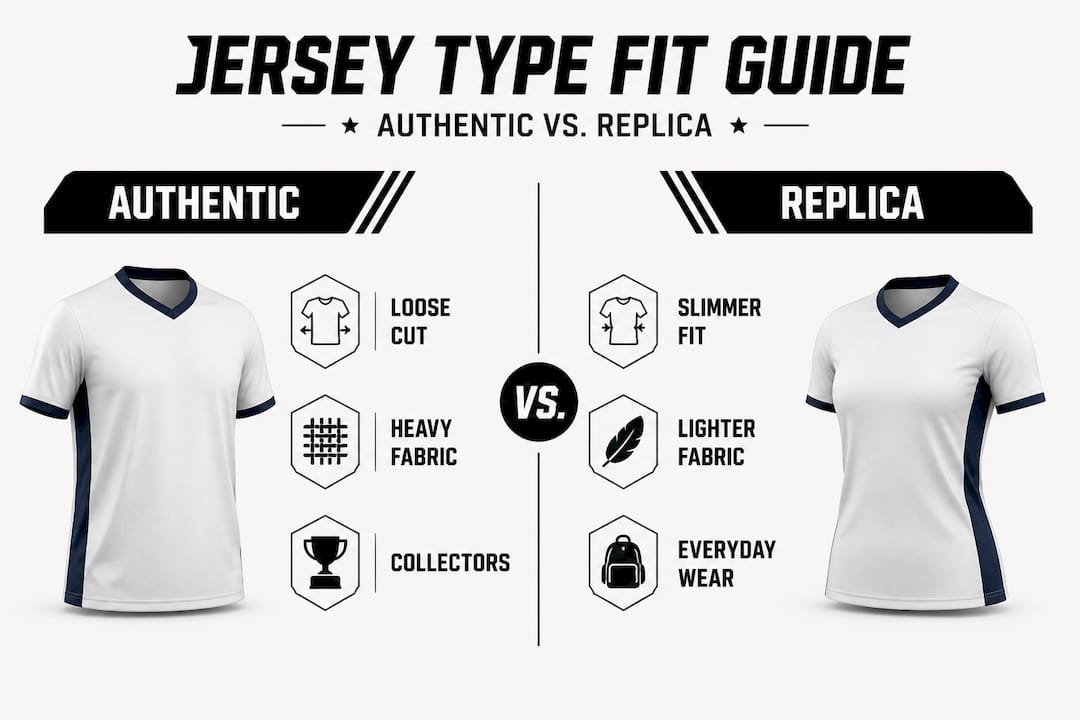
Authentic jerseys are the real deal. They’re built to the same specifications as the jerseys worn on the ice: heavier, looser, with a boxy cut designed to sit over shoulder pads and allow full freedom of movement. Replica jerseys (sometimes called fan jerseys) are made for supporters wearing the kit off the ice. They’re lighter, slightly slimmer in cut, and generally more comfortable for everyday wear. Fan fit is a term you’ll increasingly see from Adidas, referring to a more casual, streetwear-friendly shape that sits closer to the body than a traditional replica.
UK fans often find NHL jersey sizes differ considerably from UK and EU standards. North American sizing tends to run larger overall. A US medium in an NHL jersey often fits closer to a UK large, and this gap grows even more pronounced in authentic cuts. The manufacturer matters too. Reebok-era jerseys (pre-2017) tend to have a slightly different shoulder and chest proportions compared to the current Adidas Authentic and Adidas Primegreen range. Vintage CCM jerseys from the 1990s run even more generously, so era is genuinely relevant.
Here’s a quick myth-busting overview for UK buyers:
- Myth: “My UK medium will be a medium in NHL jerseys.” Fact: North American sizing runs larger; you’ll likely drop a size.
- Myth: “Authentic jerseys are always the best fit.” Fact: Authentic jerseys are sized for players wearing pads. On a regular frame, they can be extremely boxy.
- Myth: “All brands use the same chart.” Fact: Reebok, Adidas, and CCM all have slightly different measurements for the same label size.
- Myth: “I can rely on chest size alone.” Fact: Body length, shoulder width, and sleeve length all affect how the jersey sits.
| Jersey type | Cut style | Best for |
|---|---|---|
| Authentic (Adidas) | Loose, boxy, long | Collectors, costumed fans |
| Replica/fan fit | Slimmer, shorter hem | Casual wear, matchday |
| Vintage CCM/Reebok | Very generous cut | Oversized styling |
| Youth jerseys | Scaled-down adult | Younger fans, petite frames |
Understanding these distinctions early saves you a significant amount of hassle later. The type of jersey you choose will define which size chart you should reference, and that’s not a step to skip.
Step-by-step guide: How to find your perfect size
With the background knowledge in place, here’s the practical process to get your size right every single time. Don’t rely on guesswork. Take five minutes with a tape measure and you’ll save yourself the headache of a return.
-
Measure your chest. Use a soft tape measure and wrap it around the fullest part of your chest, just under your arms. Keep the tape level and snug but not tight. Note this in both inches and centimetres.
-
Measure your body length. This one gets overlooked. Measure from the top of your shoulder, down to where you want the jersey to sit (usually mid-hip to upper thigh for a traditional hockey look). NHL jerseys often sit longer than UK football shirts, so be aware of this.
-
Check the specific brand’s size chart. Adidas, Fanatics, and Mitchell & Ness all publish their own charts. Don’t use a generic “US to UK conversion” table. Go direct to the brand’s own chart for the specific jersey you’re buying.
-
Compare against something you already own. Find a top in your wardrobe with a fit you’re happy with. Lay it flat and measure across the chest and from shoulder to hem. Use those measurements to match against the jersey’s chart, not just your body measurements.
-
Consider your intended use. If you’re planning to wear the jersey to watch games at a pub or layer it over a hoodie in winter, factor that in. Choosing the right NHL fan gear means accounting for how you’ll actually wear the piece, not just what fits you in a changing room.
-
Cross-reference between US and UK sizing. As a general rule, subtract one size when comparing North American labels to UK standards. A US large is typically a UK extra-large equivalent in fit. This isn’t universal, so always check the actual chest measurement rather than relying on the letter alone.
| US size | Approx. chest (inches) | UK equivalent | Best for |
|---|---|---|---|
| Small | 36-38 | XS to S | Slim builds |
| Medium | 38-40 | S to M | Average UK build |
| Large | 40-42 | M to L | Most UK fans |
| XL | 42-44 | L to XL | Broader frames |
| XXL | 44-46 | XL to XXL | Layering or oversized look |
Pro Tip: When in doubt between two sizes, go for the larger one if you’re buying an authentic jersey, and stick with your measured size if you’re buying a replica or fan fit. Authentic jerseys are meant to drape; replicas are designed to fit more like a regular shirt.
Common sizing mistakes and how to avoid them
Even armed with a tape measure and a size chart, UK fans still make avoidable errors. Knowing these pitfalls in advance puts you well ahead of the game.
Misreading the chart entirely. Online buyers often misinterpret manufacturer size charts, especially when switching between replicas and authentics. An authentic Adidas jersey in size 50 (a numerical US sizing system used for on-ice gear) is not the same as a standard adult large. Adidas uses both lettered and numbered sizing across their range, and confusing the two is extremely common.
Buying based on fashion fit rather than jersey intention. NHL jerseys are not fitted T-shirts. They’re designed to sit away from the body. If you buy your standard UK shirt size expecting a slim silhouette, you’ll be disappointed with an authentic cut. Equally, if you buy a replica expecting the generous, oversized look of a vintage jersey, you’ll find it tighter than expected.
Ignoring the era and cut differences. A 1994 CCM Chicago Blackhawks jersey and a 2024 Adidas Toronto Maple Leafs jersey have very different proportions despite both being labelled “large.” Vintage jerseys in particular tend to have wider shoulders and longer hems. Understanding NHL jersey authentication and the history of manufacturers helps you make a smarter purchase.
Relying on the brand alone. Just because you’re a large in Adidas trainers doesn’t mean you’ll be a large in an Adidas NHL jersey. Sportswear sizing across categories varies enormously even within the same brand.
Not checking the return and exchange policy. This is especially important when buying from international retailers or picking up a vintage piece. Always confirm what the returns window is, whether exchanges are available for size issues, and whether the item is exempt from returns due to personalisation (a name and number on the back, for instance).
“The single most common complaint we hear from UK fans is that they ordered based on their normal UK size and the jersey was far too large. The second most common is that they sized down to compensate and ended up with something too tight to layer over anything. Neither problem happens if you measure first.”
Here are the key checks to run before confirming your order:
- Have you measured your chest and length in inches?
- Have you found the specific brand’s size chart (not a generic one)?
- Have you confirmed whether you’re buying authentic or replica cut?
- Have you checked if the jersey is from the current Adidas era or a vintage manufacturer?
- Have you reviewed the retailer’s return or exchange policy?
How your perfect fit should look and feel
Once you’ve done the measurements and dodged the common mistakes, here’s how to know you’ve absolutely nailed the fit. A well-fitted NHL jersey has a specific look and feel that’s distinct from other sports tops.
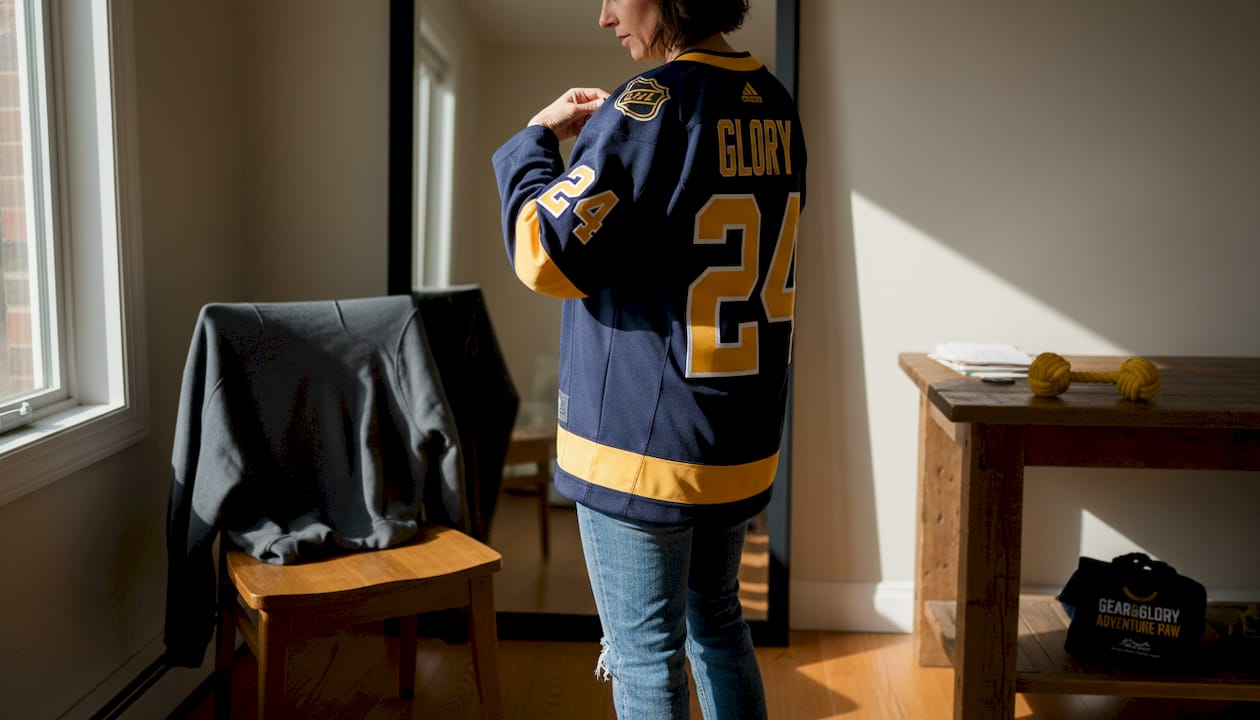
Shoulders: The shoulder seam should sit right at the edge of your shoulder, not drooping down your arm. If it’s sitting two fingers’ width below your actual shoulder, the jersey is too large.
Chest: You should be able to pinch about two to three inches of fabric at the sides when the jersey is laid against your chest. If you can pinch more than that across the front, consider sizing down (for replicas). If you can’t pinch any fabric at all, you need to size up.
Hem length: NHL jerseys traditionally sit lower than football shirts. The hem should fall somewhere between your upper thigh and mid-thigh. If it’s hitting your knee, the jersey is almost certainly too large.
Movement: Raise both arms above your head. The hem should lift a little but not expose your midriff entirely. You should have full range of movement without the jersey pulling across the back or shoulders.
Layering for UK climates: This is where UK fans have specific needs that American sizing guides don’t always account for. If you’re wearing the jersey to an outdoor event or over a long-sleeved base layer in a British winter, you need that extra inch of room across the chest. A well-fitted jersey boosts both comfort and confidence, whether you’re wearing it to a game or out on the high street.
Fashion sizing up or down: If you’re going for a streetwear look, sizing up by one gives you the relaxed, oversized silhouette that works well with joggers or wide-leg trousers. Sizing down (particularly in replicas) gives a more tailored look that pairs well with slim-fit jeans. Neither is wrong. It’s about knowing your intention before you click buy.
Why the old rules don’t apply: A fresh look at NHL jersey sizing for UK fans
Here’s something that most sizing guides won’t tell you: the vast majority of NHL jersey sizing advice online is written by and for American fans. That means the “just size up for style” rule of thumb is built around American body proportions, American weather, and American layering habits. None of those translate perfectly to the UK.
The popular American advice to “always go one size up for the authentic look” makes sense if you’re wearing a jersey to an air-conditioned arena in Arizona. In the UK, where you might be layering over a thick hooded sweatshirt to watch the game at a draughty pub in February, “one size up” from an already oversized authentic jersey turns the whole thing into a tent.
Retail-focused guides that reflect UK fit preferences are far more useful to British fans than generic American advice, because they’re built around how UK buyers actually wear these jerseys. There’s also real value in tapping into UK fan communities. Forums, Facebook groups, and Discord servers dedicated to UK-based NHL fans are full of genuine, hard-won sizing experiences. Someone who’s ordered the same Maple Leafs Adidas replica from the same UK retailer and can tell you “I’m a 40-inch chest and the large was spot on” is worth more than any generic chart.
At Gear & Glory, we’ve heard enough sizing stories from UK customers to know that a community-informed approach beats the American textbook every time. We’d also argue that why NHL merchandise matters goes beyond just owning the shirt. Wearing something that actually fits is part of the pride. A jersey that’s three sizes too big doesn’t say “dedicated fan.” It says “I bought blind and hoped for the best.”
Take the time. Measure. Ask the community. Buy with confidence.
Get your gear with confidence from Gear & Glory UK
Knowing your size is the first step. Finding the right piece to buy is the next one, and that’s where we come in.
At Gear & Glory, we stock a carefully curated range of NHL apparel chosen specifically for UK fans who want authentic gear without the sizing lottery. From current Adidas jerseys to vintage CCM and Reebok pieces, every item comes with honest sizing notes from people who’ve handled the gear in person. Alongside our NHL range, you’ll find our full collection of authentic US sports caps for the complete game-day look, and an ever-changing selection of vintage sportswear for fans who want something genuinely rare. We’re based in Market Deeping and we know what UK fans need. Shop with confidence.
Frequently asked questions
Are NHL jersey sizes the same as UK clothing sizes?
NHL jerseys follow North American sizing, which usually runs larger than UK sizes, so always check the chart before ordering rather than assuming your usual UK size will translate directly.
What’s the difference between authentic and replica NHL jerseys for fit?
Authentic jerseys fit loosely and are built for ice wear over shoulder pads, while replicas offer a slimmer, more casual silhouette suited to everyday wear.
How do I measure myself for an NHL jersey in the UK?
Measure your chest at its widest point and your body length from shoulder to where you’d like the hem to sit, then compare those measurements directly against the specific brand’s size chart.
Can I return or exchange a jersey that doesn’t fit?
Most reputable online retailers allow returns or exchanges for sizing issues, but always check the shop’s specific policy before purchasing, particularly for personalised or vintage items.
Should I size up for layering under my NHL jersey?
If you plan to wear a thick base layer or hoodie underneath, sizing up by one is sensible; otherwise, follow the fit guide for your measured chest size to get the best tailored look.
Recommended
- Choosing the right NHL fan gear: a 2026 UK guide – Gear&Glory UK
- NHL apparel explained: Stylish, authentic options for UK fans – Gear&Glory UK
- Choosing the right NBA jersey: UK fan’s complete guide – Gear&Glory UK
- NHL streetwear guide for UK fans: blend style with pride – Gear&Glory UK
- Finding the Perfect Fit: Your Guide to Stylish Formal Attire - DressMeUpNY