

NHL jersey authentication: ensure your memorabilia is genuine
TL;DR:
- Authentication verifies NHL jerseys as officially licensed with unique holograms and serial numbers.
- Authentic jerseys feature precise stitching, correct logos, and tamper-proof holograms, unlike fakes.
- Owning verified jerseys increases value, enhances fan pride, and provides peace of mind for collectors.
If you think you can tell an authentic NHL jersey from a convincing fake just by looking at it, you may be more confident than you should be. The counterfeit sports apparel market has grown sharply, and some fakes are polished enough to fool even passionate collectors. For UK NHL fans, this creates a real problem: buying blind, often from overseas sellers, with little recourse if something turns out to be wrong. Authentication is the only reliable way to know your jersey is the genuine article. This article explains what authentication means, how to spot the signs of a real jersey, and how to protect your collection.
Table of Contents
- What does NHL jersey authentication mean?
- How to spot an authenticated NHL jersey
- The benefits of owning an authenticated NHL jersey
- Common pitfalls and mistakes in NHL jersey authentication
- How to get your NHL jersey authenticated in the UK
- Why NHL jersey authentication is more important than ever for UK fans
- Get authentic sports apparel you can trust
- Frequently asked questions
Key Takeaways
| Point | Details |
|---|---|
| Check for authenticity tags | Look for serial numbers, league holograms, and official manufacturer labels on NHL jerseys. |
| Know common pitfalls | Avoid unverified sellers and always cross-check details to prevent buying a fake jersey. |
| Authentication adds value | Authenticated jerseys maintain or even grow in resale and collector value over time. |
| Use trusted services | Rely on reputable professional authentication for UK fans to ensure memorabilia is genuine. |
What does NHL jersey authentication mean?
Authentication is not just a label slapped on a box. It is a formal process that verifies a jersey is officially licensed by the NHL and manufactured to league standards. Think of it like a passport for your jersey: it confirms identity, origin, and legitimacy.
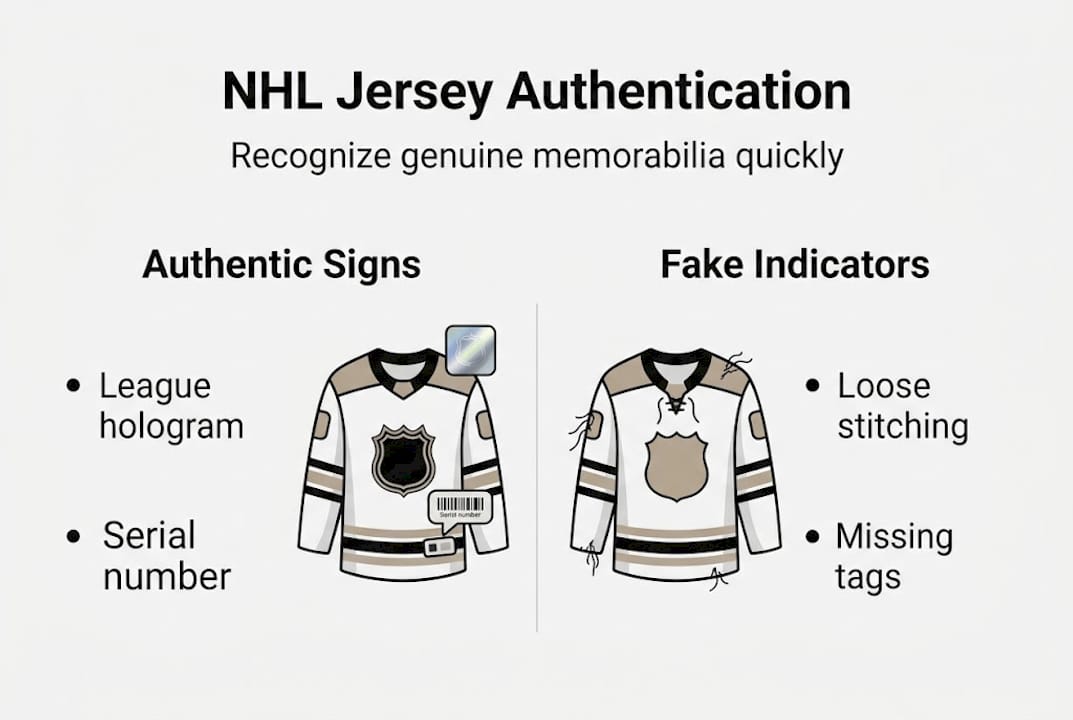
The process typically involves several checks, carried out either by official league systems or recognised third-party services. Authentic NHL jerseys feature unique identifiers such as holograms, serial numbers, and official tags that counterfeit products simply cannot replicate accurately. These identifiers are embedded during manufacture, not added later.
Here is what proper authentication generally involves:
- Official league licensing: The jersey must be produced by an authorised manufacturer under NHL licence.
- Tamper-proof holographic tags: These cannot be transferred from one item to another without visible damage.
- Unique serial numbers: Each authenticated jersey carries a traceable number registered with the manufacturer or league.
- Online verification portals: Many brands offer digital tools to cross-reference serial numbers against official records.
- Certificates of authenticity (COA): Essential for signed or limited-edition memorabilia, these documents accompany the item as proof.
Counterfeits have become increasingly sophisticated. Some include fake holograms and unofficial tags that look legitimate at first glance. The NHL jersey buying guide outlines what genuine products should include, making it a useful first reference point.
Pro Tip: If a seller cannot provide verifiable serial numbers or a COA for a premium or signed jersey, treat that as an immediate red flag.
For collectors, authentication is also about financial confidence. An authenticated jersey retains value in a way that an unverified one simply cannot, particularly when it comes to resale or insurance.
How to spot an authenticated NHL jersey
Knowing what authentication means is one thing. Being able to identify it in practice is another. Here are the key signs to look for.
| Feature | Authentic jersey | Fake jersey |
|—|—|—|
| Stitching | Tight, even, no loose threads | Uneven, machine-printed in some cases |
| Crest and lettering | Fully sewn, raised texture | Often heat-pressed or flat |
| Hologram tag | Present, tamper-proof, scannable | Missing or non-functional |
| Fabric weight | Heavier, performance-grade material | Lighter, often synthetic and thin |
| Label placement | Standardised, correct font | Inconsistent or slightly off |
There are differences in fabric quality, stitching, and detail between authentic and replica jerseys that become obvious once you know what to look for. Replicas are not the same as fakes: a replica is an officially licensed, less expensive version of a jersey, while a counterfeit is an illegal imitation.
Follow these steps when checking a jersey:
- Examine the crest and player name stitching under good lighting.
- Check the internal tags for correct font, placement, and material.
- Look for the hologram tag and attempt to scan it if the brand provides a verification app.
- Weigh the jersey if you can; genuine performance jerseys have a distinct heft.
- Cross-reference the serial number using the manufacturer’s online portal.
For additional guidance on identifying authentic sports apparel, there are detailed checks specific to American sports gear that apply equally to NHL jerseys. The NHL fan gear guide also covers what to expect from official products.
Pro Tip: If the price seems too good for a current-season, player-specific jersey, it almost certainly is. Authentic jerseys are priced to reflect the quality and licensing costs involved.
The benefits of owning an authenticated NHL jersey
Authentication is not just a collector’s concern. Even if you are buying a jersey purely to wear on match day or to show support for your team, owning a verified piece makes a meaningful difference.
The most obvious benefit is financial. Authentic jerseys retain their value far better than unverified items, particularly for rare or player-signed examples. If you ever choose to sell, an authenticated jersey will command a significantly higher price on the resale market.
“Owning an authenticated jersey is not just about the money. It is about knowing that what you have is real, and that it represents the sport and the player exactly as it should.”
Here is what authentication delivers beyond the price tag:
- Peace of mind: You know precisely what you purchased, with documentation to back it up.
- Stronger fan identity: Owning an authentic jersey can deepen your connection to the sport, showing dedication and respect for your team.
- Insurance eligibility: Some insurers require authentication documentation for high-value memorabilia claims.
- Market credibility: Collectors with authenticated pieces are taken more seriously in trading communities.
- Legacy value: Signed or limited-edition jerseys with authentication documentation become heirlooms, not just items.
For UK fans specifically, the investment in authentication is also a statement. It shows you take the sport seriously, even from thousands of miles away from the NHL authenticity standards being enforced at league level.
Common pitfalls and mistakes in NHL jersey authentication
Even experienced collectors get this wrong sometimes. Here are the most frequent mistakes UK fans make when authenticating NHL jerseys.
Even experienced fans and collectors sometimes make mistakes when verifying authenticity, especially with vintage or player-edition jerseys. The pressure to get a good deal, combined with excitement about a particular piece, can cloud judgement.
- Focusing on logo and ignoring the details: Counterfeiters often get the main crest roughly right but make errors in font, crest dimensions, or tag language.
- Trusting marketplace photos alone: A photograph, even a high-resolution one, cannot reveal fabric weight, stitching depth, or hologram functionality.
- Assuming vintage means valuable and genuine: Older jerseys require even more scrutiny. The absence of modern security features does not confirm authenticity; it simply shifts the verification process to provenance and condition.
- Buying from unverified sellers: Marketplaces with little seller accountability are high-risk environments. Stick to sellers with verified track records and clear return policies.
- Skipping the serial number check: This step is quick and free, yet many buyers skip it. Always use the manufacturer’s verification tool before completing a purchase.
For fans interested in NHL streetwear culture, the same authentication principles apply when jerseys cross into fashion territory. A rare vintage piece worn as streetwear is only as credible as its provenance.
Pro Tip: When buying from a secondary marketplace, request a video call with the seller to inspect the jersey live, including close-ups of the internal tags and hologram.
This authentication mistakes guide is a useful external reference for understanding the nuances, particularly for older or rarer pieces.
How to get your NHL jersey authenticated in the UK
For UK fans, the geographical distance from North America can make authentication feel complicated. It is not. There are clear, accessible options available.
Several companies and authentication services cater to UK and European NHL fans, offering certificate services and online verification. Here is a breakdown of the main options:
| Authentication route | What it involves | Best for |
|---|---|---|
| Manufacturer portals | Online serial number verification | New or recent jerseys |
| Third-party services (e.g. PSA) | Physical inspection and COA issuance | Signed or high-value items |
| Reputable UK retailers | Pre-verified stock, authentication on request | Buyers wanting simplicity |
| Specialist memorabilia dealers | Expert appraisal and documentation | Vintage or rare pieces |
For signed jerseys or high-value memorabilia, PSA authentication is one of the most widely recognised services globally, accepted by collectors and auction houses alike.
When choosing an authentication route, look for:
- A clear written certificate of authenticity with item-specific details.
- A verifiable database entry linked to the certificate number.
- The authenticator’s credentials and reputation within the sports memorabilia community.
- A physical examination process, not just a photo submission.
For further guidance on building your collection wisely, the 2026 UK NHL gear guide covers how to approach purchases as a UK-based fan with confidence.
Why NHL jersey authentication is more important than ever for UK fans
Here at Gear & Glory, we see something interesting in the UK NHL market: the fans who care most about authenticity are not always the ones with the biggest collections. Sometimes, it is the fan with one prized jersey who understands its value most clearly.
The counterfeit market has grown more sophisticated in step with rising global demand for NHL gear. A fake that passed inspection five years ago might look crude today, but the latest generation of counterfeits is a different matter entirely. Authentication is no longer optional for anyone serious about what they own.
There is also a cultural dimension here. UK-based NHL fandom is growing, and how British collectors engage with the memorabilia market shapes its future. Insisting on authenticated, verified pieces raises the standard for everyone. It signals to sellers, importers, and the wider market that UK fans will not settle for second-rate goods.
The idea that vintage streetwear authenticity matters as much in fashion circles as it does in traditional collecting underscores the point: whether your jersey lives in a display case or on your back on a night out, knowing it is real changes everything about how it feels to own it.
Get authentic sports apparel you can trust
If this article has convinced you that authentication is non-negotiable, the next step is making sure you shop with that same confidence.
At Gear & Glory, every piece in our range is sourced with authenticity in mind. From current-season NHL jerseys to carefully selected vintage sports clothing, we make it our business to know exactly what we are selling. You should never have to wonder whether what you are wearing or displaying is the real thing. Browse our full range of American sports apparel, including authentic US sports caps, and shop knowing that every item has been chosen with the same scrutiny you now know to apply yourself.
Frequently asked questions
What features prove an NHL jersey is authentic?
Authentic NHL jerseys include official holograms, serial numbers, league branding, and tamper-proof manufacturer tags. These unique identifiers are embedded during manufacture and cannot be accurately replicated by counterfeiters.
Can fake NHL jerseys be authenticated after purchase?
No, only genuine jerseys can receive professional authentication. Fakes will not pass the process because they lack the manufacturer-registered serial numbers and official licensing that verified services require.
Does authentication increase jersey resale value?
Yes, authenticated NHL jerseys typically hold or increase their value, especially for rare or signed editions. Authentic jerseys retain value far better than unverified items in the resale and collector markets.
Are UK-based authentication services reliable?
Yes, reputable UK-based and international services provide trustworthy authentication and certificates recognised by collectors worldwide. Several services cater specifically to UK and European NHL fans.
How can I avoid buying fake NHL jerseys online?
Buy only from authorised retailers with a clear reputation for authenticity, and always check for official tags and serial numbers. Officially licensed retailers provide verifiable products with proper authentication details included as standard.
Recommended
- Why choose authentic NHL gear: value, pride and quality – Gear&Glory UK
- NHL apparel explained: Stylish, authentic options for UK fans – Gear&Glory UK
- NFL jersey checklist for UK fans: spot quality fast – Gear&Glory UK
- UK guide to buying authentic NFL jerseys in 2026 – Gear&Glory UK
- How to Authenticate Australian Opals for Genuine Value - Australian Opal Direct